
Food of the Month – Spinach
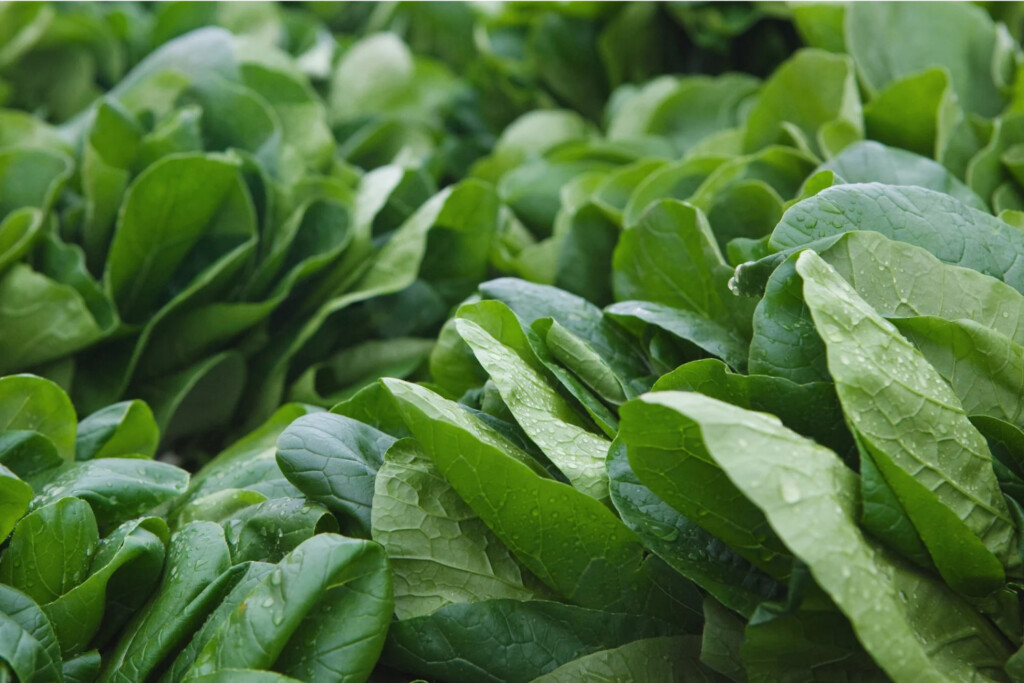
Spinach (Spinacia oleracea) originated in ancient Persia and made its way through Arabia into Europe by the 11th century. It thrives in cool climates and is one of the most widely cultivated leafy greens in the world. Known for its tender, dark-green leaves and mild, slightly earthy flavor, spinach can be eaten raw or cooked and lends itself to an enormous range of dishes.
What sets spinach apart is its remarkable nutrient density relative to its calorie count. A single cup of raw leaves contains only about 7 calories yet delivers a concentrated hit of vitamins, minerals and antioxidants. Its versatility, year-round availability and quick cooking time have made it a staple for home cooks and professional chefs alike.
Nutrition:
A standard serving of spinach—about 3 cups raw (85 g) or ½ cup cooked—is an excellent source of vitamins K, A and C, as well as folate, iron, magnesium and potassium. Spinach also contains lutein and zeaxanthin, two antioxidants linked to eye health, and its high folate content supports healthy cell function.
Storage Tips:
- Store unwashed spinach in a breathable bag lined with a paper towel.
- Keep in the coldest part of the fridge; use within 3 to 5 days.
- Do not wash until just before use—moisture speeds wilting.
- Briefly soak wilted leaves in ice-cold water to revive them.
- Blanch, squeeze dry, and freeze for up to 12 months.
Fun Facts:
- Oxalic acid slightly reduces spinach’s own calcium and iron absorption.
- A 19th-century decimal-point error started the myth of spinach’s iron richness.
- Spinach is botanically related to beets, chard, and quinoa.
- Baby spinach is the same plant, just harvested earlier and more tender.
Published on November 18, 2026